

Sharing common interests
Farewell to Terry Farrell and Jonathan Main, and introducing three fascinating new books

Thanks to everyone who came along to the recent walks I led in Milton Keynes (with Pooleyville) and Croydon (with Croydon Council) as part of Open House. Hope you found them fun and interesting, it was certainly great meeting so many people and getting to show off some hidden gems and shady corners.
In Memorium
Two unconventional creative people I know passed away recently. Jonathan Main ran Bookseller Crow on the Hill in Crystal Palace with his partner Justine. And architect Terry Farrell was responsible for some of the most recognisable modern buildings worldwide. Both were very generous to me with their time and help, and I owe them a lot.
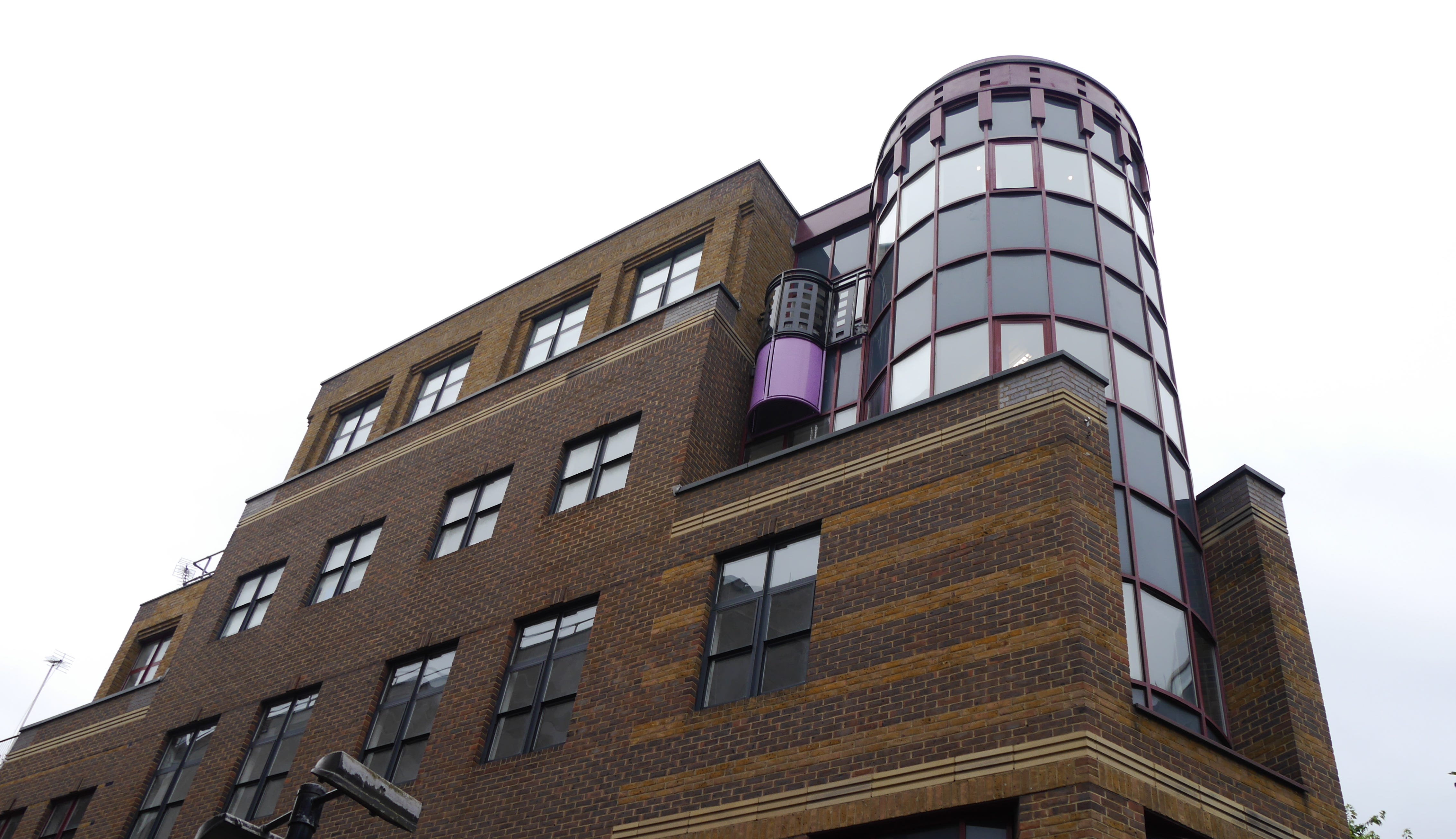
At the memorial service for Jon, comedian Ben Moor described how important places are where we can meet and share common interests in a world that feels increasingly fractured. At Bookseller Crow, Jon, Justine and Karen have created somewhere that has become a real centre for the community. The amount of love at the service for him and the shop said a lot about how generous it is to create a space to bring people into, a place that allows us to feel welcome while also being challenged by what we do not know. A comfortable discomfort.
I was very lucky to have had the launch for my first book, Concretopia, at Bookseller Crow in November 2013. Despite years of working in publishing it was all a bit overwhelming, a mixture of family and friends, and people who’d come along because it sounded interesting, people Jon had persuaded into the shop through some canny marketing a of a book by an unknown author. It was packed. And what could have been one of the most stressful evenings of my life was instead ridiculously fun. I’d come back to Bookseller Crow many times, usually as a customer, but also for events for Oustkirts and Iconicon, and to take part in Karen’s Spark-eoke, a tribute to Muriel Spark. Each visit was an adventure and a laugh. Perfect.

One of the things I really loved about Terry Farrell’s buildings was his interest in the everyday taste of people, and his desire to design places that connected up with the world rather than appearing as barriers and objects that stand alone.
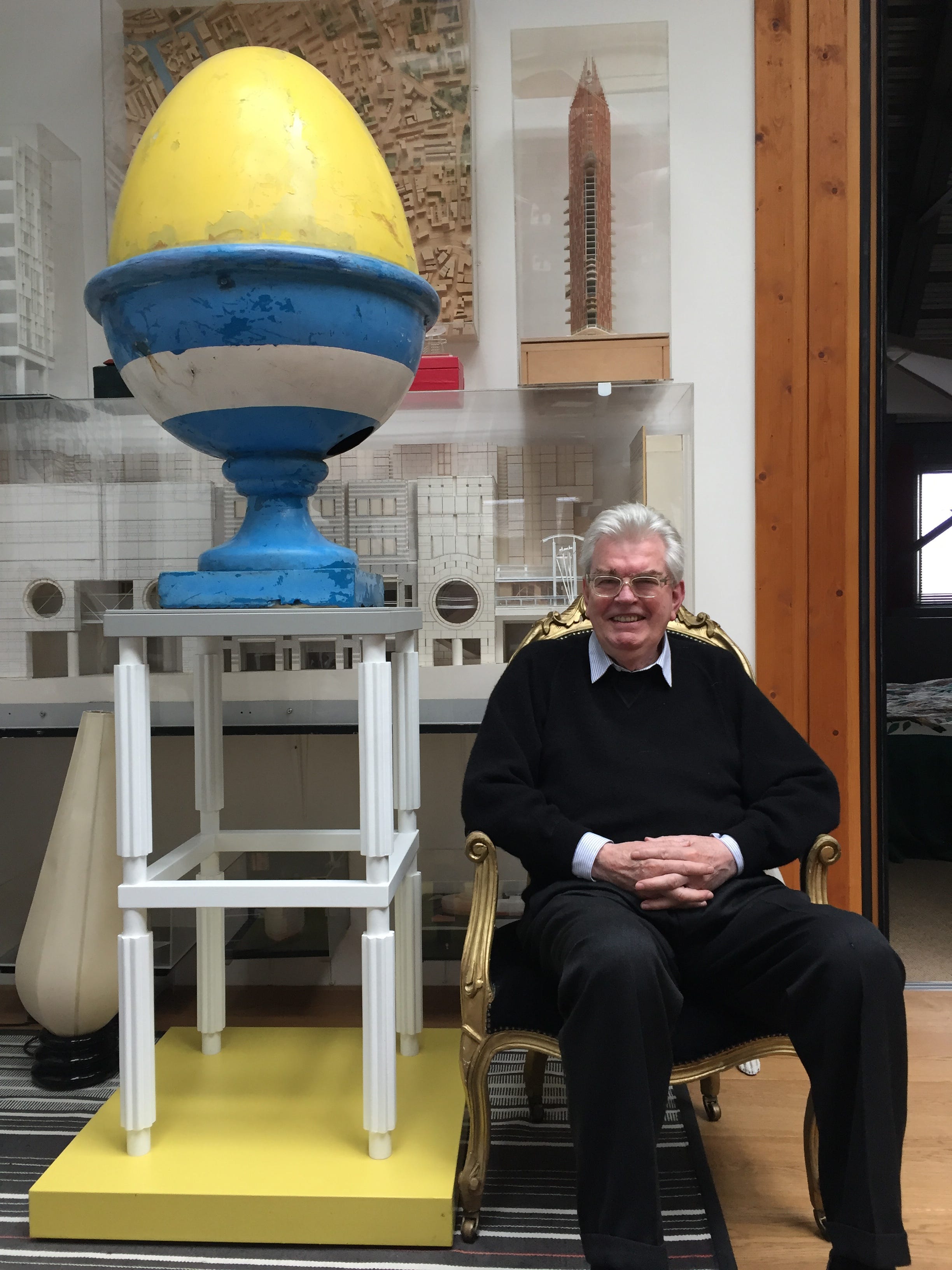
Here’s a section from my book Iconicon when I interviewed him about this:
‘Reacting against his clubbable rivals, Farrell told me he took inspiration not from the elitist but the commonplace. “I found art deco absolutely fascinating because it was universal and it was appealing to everybody, not just a few.” This interest began to flood into his work. “I was teaching in 79 in the AA [Architectural Association] and I did a project called Learning from Chigwell, which was about what people did with their houses at the lower rungs of the ladder. What plastic lions and pediments they did in their front garden. And what they did in their back garden was sheds and greenhouses and so on.” By 1980 he was bringing these interests to bear on Oakwood, an estate of timber-framed houses in Warrington. “I made it fun,” he said. “I did sunburst inserts in the front doors which were none of them the same.” He also did a study predicting what would happen to them within thirty years, the new doors and cladding, the extensions and styling. “It was a social snob thing but it was also self-expression. Pride in ownership. I was fascinated by expressions of personal taste.”’
Later we discussed Embankment Place, his building above Charing Cross Station.
‘“It was unbelievably complicated,” recalled Farrell. A strict price cap meant they were constantly scaling back from initial designs. Even so, “we deliberately had complexity in mind. It was multilayered. We designed all the Villiers Street buildings in different bricks.” Entrances varied from polished marble to granite. “We deliberately did things varied. I was very conscious of the small scale and the medium scale, and the big scale from the river. Which was very different from City Hall by Fosters,” he said, referring to the High Tech home to London’s mayor beside Tower Bridge, “which once you’ve seen it it’s complete. It’s like a candle,” he said, picking one up from his table and turning it round in his hand. “It’s a complete functional object, and I was opposed to that and I still am. I think complexity and multilayered and extending the boundaries of the project to include pavement and streets . . .” He drifted off, as if the complexity he’d conjured up had suddenly leapt from his hands and was now swirling around the room and out into the universe through the skylight above.’
There’s something of that attitude to Jon’s work at Bookseller Crow too, a desire to be multi-layered, to respond to different taste, and to curate something magnificent from all of these different elements. A generosity about how to meet the world. We need more generous spirits.
There’s a fundraiser to help Bookseller Crow on the Hill continue on after Jon’s untimely death. You can find out more here.
Three books, three ways of seeing the world
I’d like to bring to your attention three excellent books that have recently been released. Firstly, Jessica Field’s fascinating Eviction: A Social History of Rent, recently published by Verso. Jessica won the inaugural Dawn Foster Memorial essay Prize, and this book holds echoes of Dawn’s spirit of personal-as-political. She tells the story of the Airey prefabs in Oulton, West Yorkshire, built by the National Coal Board, where her family lived and with which they had a complicated relationship, both the poorly maintained homes and the threats of demolition and breaking up of the community there. On top of this personal story Jessica also traces a wider history of homes for rent, and the way this has evolved in Britain from private landlords to municipal and back again. Needless to say if you love Dawn Foster’s writing, or that of John Boughton’s Municipal Dreams or Lynsey Hanley’s Estates, then this is the book for you.


Next up, something quite different: Brutalist Interiors by Derek Lamberton of Blue Crow Media, a handsome photographic celebration of modernist interior design, accompanied with essays from the likes of Deane Masden, Blake Gopnik and Naomi Pollock. While the silhouettes and exteriors of brutalist buildings are well catalogued and fetishized, the interiors are often a more unheralded and surprising aspect, and so this glorious beast brings us unexpected views and details from around the world, from the extraordinary extrusions of Walter Maria Förderer’s Saint Nicholas Church in Hérémence, Switzerland, to the cavernous geometry of Christopher Kringas’s High Court of Australia in Canberra. It’s a truly life-enhancing glimpse into a world few of us ever get to experience, certainly on such scale. Also, more astonishing staircases than even MC Escher could have imagined.
And finally there’s Tom Cox’s novel Everything Will Swallow You, a shaggy dog story of friendship, and our relationship with time, and with place. It’s full of mysteries and diversions that keep opening it out to touch on more of the myriad experiences of being alive. It’s a really wonderful book, like Pynchon remade in the style of Detectorists. This is Tom’s third novel, and many will know him from his non-fiction writing of place and nature, and it’s every bit as funny, mystical and unexpected as those books too.
You can find all of these books and more on my New Adventures in Architecture list at Bookshop.org
Monstrosities update
Apologies for Monstrosities Mon Amour taking a month off, but it’s back with a bang, or at the very least, some jingly carousel music and the bleeping of slot machines, as seaside historian Kathryn Ferry takes us to Blackpool’s Golden Mile to explain her love for this often disparaged place, and its outrageous history. All ten episodes are available either through Substack, Apple Podcasts, YouTube or your favourite podcast supplier.
You can find books written by the guests of the show on this list.
I also guested on a splendid podcast about Milton Keynes, More Jam Tomorrow by Ros Taylor. You can listen to that here.
See you next time! x